What is HDPE Pipe? The Ultimate Guide to High-Density Polyethylene Piping
Time: February 10, 2026


What is HDPE Pipe?
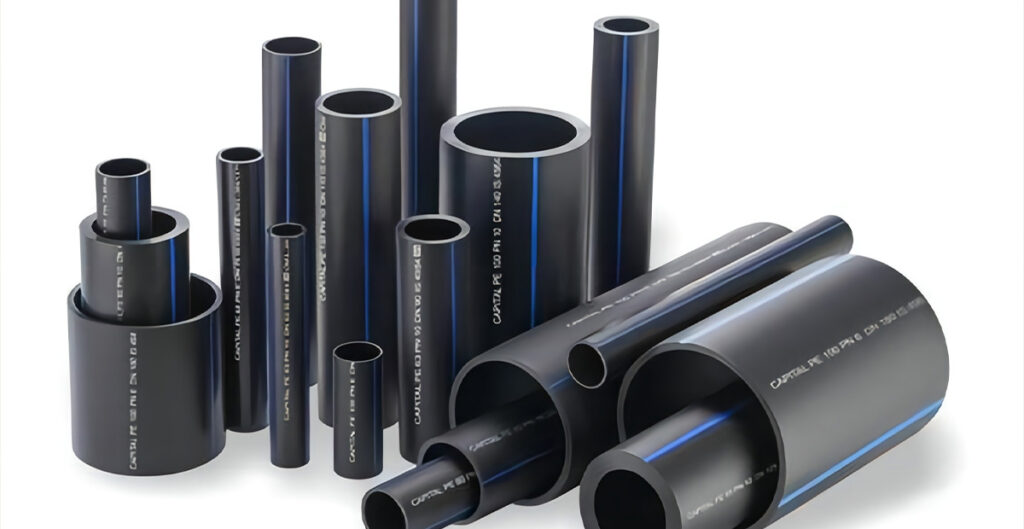
HDPE pipe, short for High-Density Polyethylene pipe, is a versatile, flexible plastic piping system primarily used for high-pressure fluid and gas transfer. Known for its exceptional strength-to-density ratio, it has become the preferred choice for replacing aging steel or concrete pipelines in modern infrastructure.
The material is derived from petroleum-based resin, specifically a high-density thermoplastic. This chemical composition provides the pipe with its signature "toughness"—it is rigid enough to withstand heavy loads yet flexible enough to bend without cracking.
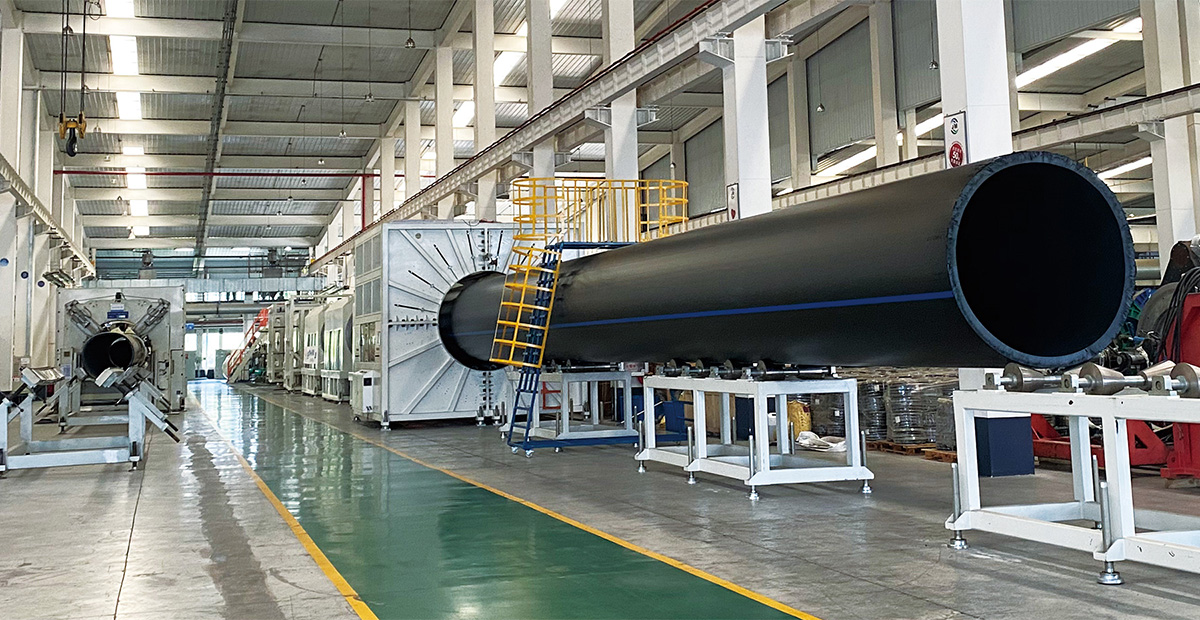
The manufacturing process is a specialized form of extrusion. It begins with high-quality raw polyethylene pellets, which are fed into a heated hopper. These pellets are melted and pushed through a precision die to create a continuous pipe shape. After exiting the die, the molten pipe is immediately moved into vacuum and cooling tanks, where water sets the dimensions and solidifies the plastic. This seamless production method ensures a uniform wall thickness and a smooth interior, which reduces friction and prevents mineral buildup over decades of use. Essentially, it is a high-performance material engineered for long-term reliability in the field.
Advantages and Limitations of HDPE Pipe
Key Advantages of HDPE Pipe
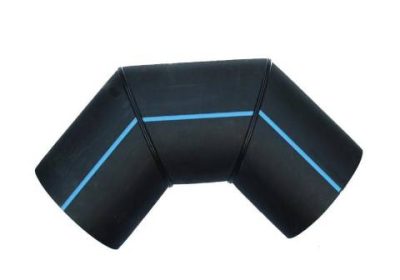
- Exceptional Flexibility: HDPE is incredibly "forgiving." It can be bent on-site to a radius up to 25 times its diameter. This flexibility allows it to follow the natural curves of a trench or riverbed, drastically reducing the need for expensive elbows and fittings.In addition, this "ductility" allows it to survive earthquakes or freezing water without bursting.
- Lightweight for Easy Logistics: From a shipping and handling perspective, HDPE is a winner. It is much lighter than metal or concrete, meaning you can transport more pipe per truckload and often move it on-site without heavy cranes, saving significantly on labor and freight costs.
- Superior Flow Efficiency: The interior surface of HDPE is ultra-smooth (offering a high C-factor). This smoothness prevents "scaling" or mineral buildup over time. For the end-user, this means lower pumping costs because there is less friction to overcome.
- Leak-Free Integrity: While other pipes rely on rubber gaskets that can perish or leak, HDPE uses heat fusion. This process creates a monolithic, continuous system where the joint is actually stronger than the pipe itself.
- High Impact Resistance: Unlike PVC, which can become brittle and crack if dropped or hit (especially in cold weather), HDPE is remarkably "tough" and can withstand rough handling during installation.
- Unmatched Corrosion Resistance & 100-Year LifespanTraditional metal pipes are prone to rust and tuberculation (internal scaling), which narrows the pipe over time. HDPE is chemically inert. It does not rust, rot, or corrode, and it is resistant to biological growth. This makes it the ideal solution for "hot" soils or acidic mining environments. When installed according to industry standards, an HDPE system has a design life of 50 to 100 years, drastically reducing the need for expensive repairs or replacements.
- Advanced UV Protection for Above-Ground UseA common concern for international buyers is whether the pipe can withstand intense tropical sun. Because HDPE is a thermoplastic, it requires protection from ultraviolet rays. Professional-grade HDPE pipes are manufactured with 2% to 3% Carbon Black. This additive acts as a built-in "sunscreen," allowing the pipe to be safely exposed to direct sunlight and used above ground for decades without becoming brittle or losing its pressure rating.
- 100% Recyclable (Circular Economy)At the end of its long service life, HDPE does not have to end up in a landfill. It is a Code 2 plastic, meaning it is 100% recyclable. Old pipes can be ground down and pelletized to create new products, such as non-pressure drainage pipes, plastic lumber, or shipping pallets. This recyclability is a huge advantage for companies aiming to meet ESG (Environmental, Social, and Governance) targets.
Limitations to Consider
- Thermal Expansion: HDPE expands and contracts with temperature changes more than metal does. If installed above ground, the pipe will "snake" slightly as it heats up. This is normal but must be factored into the design with proper anchoring.
- Temperature Sensitivity: While it handles cold perfectly, it isn't designed for very hot fluids. It is generally not recommended for applications where the liquid temperature exceeds 60°C(140°F) on a continuous basis.
- Sensitivity to Scratches and Gouging While impact-resistant, HDPE is softer than metal. Surface damage or gouges exceeding 10% of the wall thickness can compromise pressure integrity. Careful handling during transport and using sand bedding in trenches are essential to avoid sharp rocks causing mechanical failure.
- Precision-Dependent Installation HDPE cannot be simply "plugged together." The system relies on heat fusion, which requires specialized equipment and trained technicians. If temperatures are incorrect or the environment is dirty, joints may look solid but fail under pressure, making quality control during installation absolutely critical.
- Thermal Expansion and Contraction HDPE moves significantly with temperature changes. In above-ground setups, the pipe will "snake" as it heats up. Designers must account for this expansion by using specific anchoring methods or expansion loops to prevent stress on pumps and connected machinery.
- No Solvent Gluing Unlike PVC, HDPE’s high chemical resistance means it cannot be joined with solvent cements or glues. You must use heat fusion or mechanical fittings. This creates a superior, leak-free bond but requires more preparation and specialized tools compared to traditional "glue-and-go" piping.
Common Applications and Engineering Scenarios
To select the right piping material, it is essential to look at how HDPE performs under specific field conditions. Its selection in engineering projects is usually driven by the need for zero-leak joints, chemical resistance, or the ability to handle ground movement.
- Municipal Potable Water Supply
In municipal infrastructure, HDPE is the primary choice for main distribution lines and service connections carrying treated drinking water. Operating typically at ambient temperatures with pressure ratings of PN10 to PN16, these systems benefit from the material’s "monolithic" nature. Because butt-fusion creates joints stronger than the pipe itself, it eliminates the leak points common in gasketed PVC or ductile iron systems. This significantly reduces water loss and prevents root intrusion in underground city grids. - Industrial Chemical Processing
Industrial facilities use HDPE for cooling water circuits and the transport of corrosive process fluids, including various salt solutions and weak acids or alkalis. Since the material is chemically inert, it avoids the internal pitting and thinning that plague carbon steel pipes. While restricted to temperatures below 60°C, it is an ideal, low-maintenance solution for chemical waste lines. These systems often combine butt-fusion with flanged connections to allow for easy integration with existing pumps and metallic valves. - Natural Gas Distribution
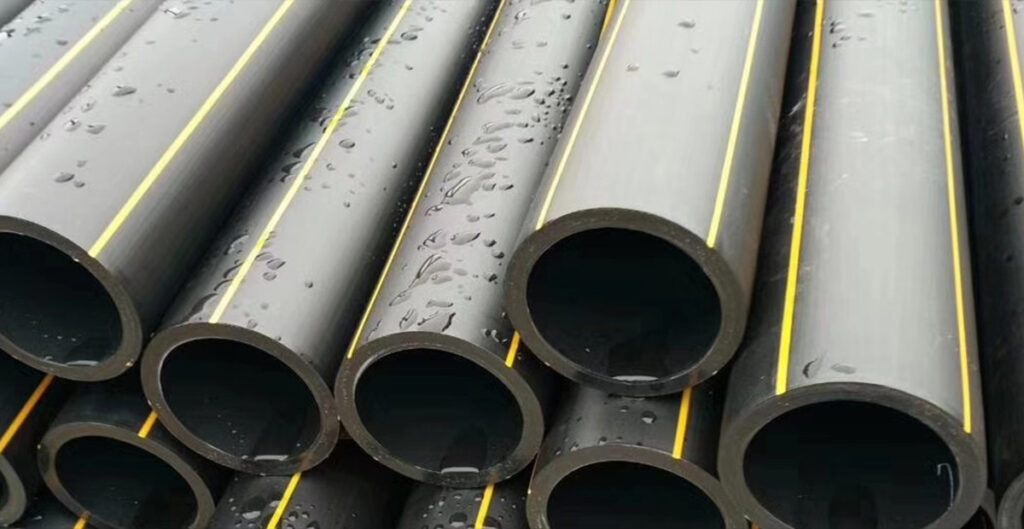
For the energy sector, HDPE is the global standard for low-to-medium pressure natural gas networks. These pipelines usually require high-precision SDR 11 or SDR 17.6 pipes. Engineers prefer HDPE here because it does not require cathodic protection against corrosion and can withstand significant soil shifting or seismic activity without brittle failure. Most gas projects utilize electrofusion fittings to ensure highly localized, traceable, and secure connections that meet stringent safety codes. - Mining Slurry and Tailings Transport
In mining operations, pipes must transport abrasive mineral slurries, process water, and tailings—often a mix of water and crushed rock. HDPE outlasts steel in these environments because it has superior abrasion resistance and a smooth internal surface that prevents "scaling." Engineers typically specify heavy-wall pipes (SDR 9 or SDR 11) to handle high-velocity friction and fluctuating pressures. The pipe's flexibility also allows it to be moved easily across rugged, changing terrain as the mine expands. - Agricultural Irrigation Systems
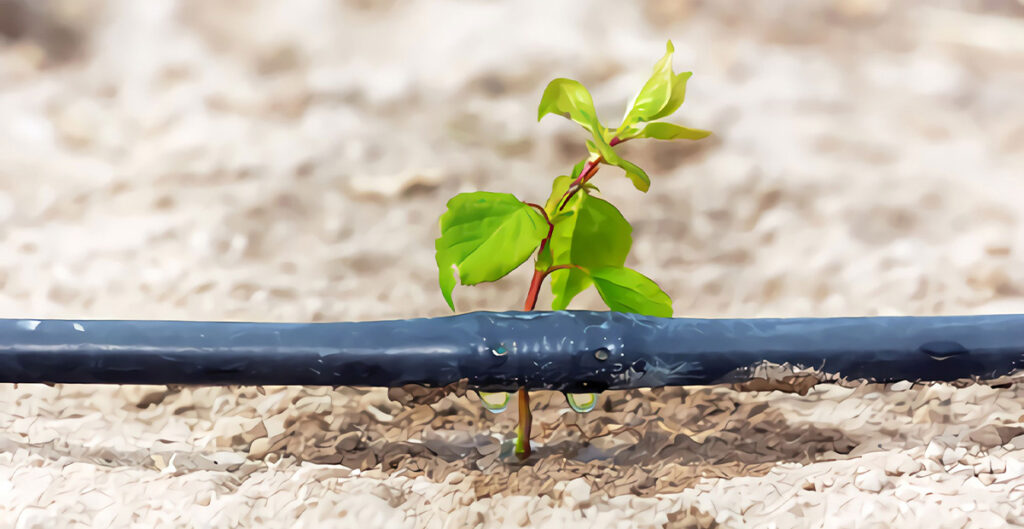
Large-scale agricultural projects utilize HDPE for main supply lines and lateral distribution to transport untreated river or well water. For these applications, SDR 17 or SDR 21 is frequently used to manage cost while providing sufficient pressure for sprinkler or drip systems. The pipe’s high UV resistance allows it to be laid directly on the ground surface in sun-exposed fields without becoming brittle. Contractors often use mechanical compression fittings for smaller diameters or socket fusion for quick, on-site modifications. - Wastewater and Sewage Force Mains
HDPE is widely implemented in pressurized sewer systems (force mains) and gravity-fed effluent lines. It is particularly effective in resisting the hydrogen sulfide gas often found in sewage, which can cause concrete and metal pipes to disintegrate. The smooth "C-factor" of the internal wall prevents the buildup of solids and maintains flow efficiency over decades. For most municipal sewage applications, PN6 to PN10 ratings are specified, using butt-fusion to ensure that untreated waste cannot leak into the surrounding groundwater. - Telecommunications and Electrical Ducting
In the telecom industry, HDPE acts as a protective conduit for fiber optic and electrical cables. This is a non-pressure application focused on mechanical protection and ease of installation. Using long, coiled lengths of HDPE ducting reduces the number of joints, and the pipe’s low friction coefficient allows for easier cable pulling or blowing. Its flexibility makes it the preferred material for Trenchless Technology, such as Horizontal Directional Drilling (HDD), which allows for cable installation under roads and rivers with minimal surface disruption.
Technical Specifications & Standards
When sourcing HDPE pipe, you will encounter several key terms that define the pipe's performance. Here is what you need to know:
What are SDR and PN Ratings?
These are the two most critical numbers in your specification list.
- SDR (Standard Dimension Ratio): This is the ratio of the pipe's outside diameter (OD) to its wall thickness (SDR=OD/Thickness). A lower SDR number means a thicker wall and a higher pressure capacity.
- PN (Nominal Pressure): This indicates the internal pressure (in bars) the pipe can handle at 20°C. For example, PN16 is rated for 16 bars of pressure.
Key Technical Data at a Glance
| Property | Value / Description |
| Material Grade | PE80, PE100, PE100-RC (Crack Resistant) |
| Density | 0.93 to 0.97 g/cm3 |
| SDR Range | Commonly SDR 11, SDR 13.6, SDR 17, SDR 21, SDR 26 |
| Pressure Rating | Commonly PN6 to PN25 |
| Temperature Range | -40°C to 60°C(Pressure derating applies above 20°C) |
| Certifications | ISO 4427, ASTM D3035, EN 12201, AS/NZS 4130 |
How to choose the right HDPE pipe pressure rating?
How you connect the pipe is just as important as the pipe itself. The goal is a "monolithic" system where the joint is as strong as the pipe.
- Most Common Joining Method: Heat Fusion. This includes Butt Fusion (melting two ends together) and Electrofusion (using a fitting with internal heating coils). During fusion, "interface pressure"—the precise pressure applied to the pipe ends while they are molten—is critical for a perfect molecular bond.
- Connecting to Valves: To connect HDPE to a metal gate valve, you cannot use glue. You must use a Flange Adapter and a Backing Ring. The adapter is fused to the pipe end, and the backing ring allows you to bolt it directly to the valve's metal flange.
HDPE vs. Alternative Materials: A Comparative Guide
When selecting piping for a long-term project, you are usually choosing between HDPE, PVC, and traditional metals. The table below breaks down how these materials perform across key engineering and financial metrics.
| Feature | HDPE Pipe | PVC Pipe | Steel Pipe | Ductile Iron |
| Corrosion Resistance | Excellent. Chemically inert; won't rust or rot. | Good. Resistant to most acids/alkalis. | Poor. Requires coating/cathodic protection. | Moderate. Prone to internal/external rust. |
| Joint Type | Heat Fusion. Leak-free, monolithic joints. | Gasket/Solvent. Potential leak points over time. | Welded/Flanged. Labor-intensive. | Bell & Spigot. Gaskets can perish. |
| Installation Speed | Fast. Lightweight and flexible; fewer fittings. | Moderate. Rigid sections; requires more fittings. | Slow. Heavy; requires cranes and welding. | Slow. Very heavy; requires heavy machinery. |
| Design Life | 50 – 100 Years | 30 – 50 Years | 20 – 50 Years (with maintenance) | 50+ Years (if coated) |
| Flexibility | High. Can bend around obstacles. | Low. Brittle; may crack under ground shift. | None. Requires elbows for every turn. | None. Rigid system. |
| Total Cost (TCO) | Lowest. Minimal maintenance and zero leaks. | Low to Mid. Higher repair frequency. | High. High maintenance and installation costs. | High. High material and labor costs. |
FAQ
The most reliable way to transition from HDPE to steel is by using a Flange Adapter and a Backing Ring. You fuse the adapter to the HDPE end and then bolt it to the steel pipe's flange. For smaller diameters, threaded transition fittings (male or female NPT) are also available.
For small diameters (under 63mm), a handheld ratchet-style pipe cutter is best for a clean, square cut. For larger industrial pipes, a common handsaw or a reciprocating saw (Sawzall) works well. Always ensure the cut is "square" (90 degrees) to the pipe axis to ensure a proper heat fusion bond.
Yes, you can use heat trace cables on HDPE, but you must use a self-regulating heat trace and ensure the temperature does not exceed the pipe’s maximum rating (usually 60°C). It is also recommended to use an aluminum foil wrap over the pipe before applying the cable to distribute the heat more evenly.
If a pipe is punctured, the standard professional repair method is using an Electrofusion Repair Clamp or a mechanical coupling. For significant damage, the compromised section is cut out, and a new piece is "fused" in its place using a double-ended electrofusion coupler.
HDPE is virtually maintenance-free as it doesn’t rust or corrode. Simply perform periodic visual checks for mechanical damage (gouges over 10% wall thickness) and ensure above-ground supports allow for thermal expansion. If a leak occurs, use electrofusion couplers for a permanent, reliable repair.
Absolutely. HDPE is the preferred material for Horizontal Directional Drilling (HDD) because of its high tensile strength and flexibility. It can be pulled through long boreholes under roads or rivers without the need for open-cut trenching, which saves significant time and cost.
Pricing depends on resin market rates, SDR rating, and volume. While offering the lowest total cost of ownership, prices fluctuate. For a real-time quote and project-specific pricing, contact our engineering team today with your specifications—we provide competitive factory-direct rates and worldwide shipping.
Get Expert Support for Your Project
Need reliable piping solutions with factory-direct pricing? Our engineering team is ready to provide the technical data and competitive quotes you need to move forward.
[Get a Fast Quote] – Submit your specs and receive a custom price list within 24 hours.
[Download Technical Specs] – Get our full SDR & Pressure Rating charts for your design.
[Free Technical Consultation] – Contact us to discuss your specific application needs.