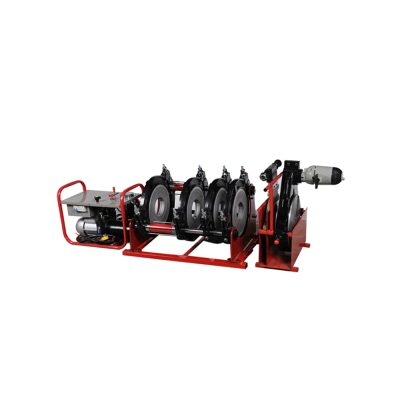
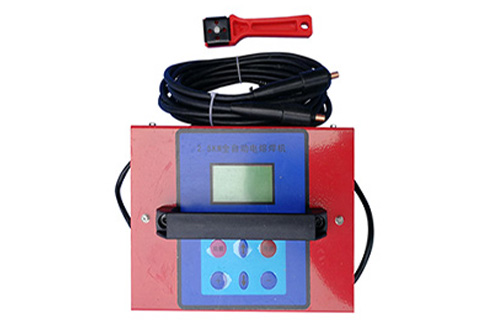
HDPE Butt Fusion Welding Machine
- Water supply field
- Agricultural irrigation field
- Mining field
- Construction sector


Complete control over products allows us to ensure our customers receive the best quality prices and service.
SEND EMAIL
| Parameter | HDM200 | HDM315 | HDM500 |
| Welding Range | 20mm – 200mm | 20mm – 315mm | 20mm – 500mm |
| Input Voltage | 190V – 240V | 190V – 240V | 190V – 240V |
| Frequency | 40Hz – 60Hz | 40Hz – 60Hz | 40Hz – 60Hz |
| Output Power | 3KW | 3KW | 4KW |
| Output Voltage | 10V – 48V | 10V – 48V | 10V – 48V |
| Control Type | Constant Current/Volt | Constant Current/Volt | Constant Current/Volt |
| Time Adjust Range | 1 – 9999 Seconds | 1 – 9999 Seconds | 1 – 9999 Seconds |
| Time Deviation | ≤ 1% | ≤ 1% | ≤ 1% |
| Relative Humidity | ≤ 80% | ≤ 80% | ≤ 80% |
| Weight | 20kgs | 20kgs | 25kgs |
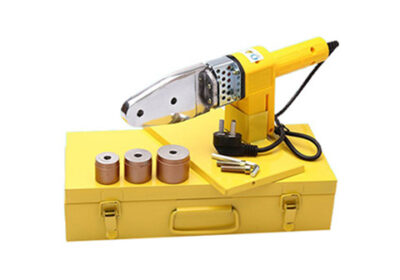
An electrofusion welding machine is a specialized digital power control unit designed for joining thermoplastic pipes, primarily HDPE and PP. Unlike manual welding, it acts as a high-precision processor that delivers a specific electrical current to the resistive coils embedded within an electrofusion fitting. This process creates a homogenous, leak-proof bond that is structurally as strong as the pipe itself, making it the standard for high-pressure gas and water infrastructure.
The machine operates on the principle of electrical resistance heating. Once connected to a fitting, the control unit regulates the output voltage based on the fitting's specific requirements. As current flows through the fitting's internal copper coils, it generates controlled thermal energy that melts both the outer surface of the pipe and the inner surface of the fitting. As the molten material expands under pressure within the "fusion zone," the polymer chains intermix, creating a permanent molecular bond upon cooling.
1.Preparation: Square the pipe ends and use a professional mechanical scraper to remove the oxidation layer from the fusion zone. Clean the area thoroughly with 90%+ isopropyl alcohol.
2.Assembly: Mark the insertion depth and push the pipe into the fitting until it hits the center stop. Use clamps to ensure the assembly is stress-free and aligned.
3.Connection: Plug the machine’s output terminals into the fitting’s pins.
4.Programming: Use the industrial barcode scanner to scan the fitting’s barcode; the machine will automatically set the required voltage and time.
5.Fusion: Press "Start." The machine will monitor the process and alert you once the cycle is complete.
6.Cooling: Observe the mandatory cooling time indicated on the fitting before removing clamps or applying pressure.
To ensure a successful weld, always verify that your power source (such as a field generator) is stable, as the machine requires consistent voltage for a perfect melt. Before starting, confirm that the pipe is completely dry and free of debris. During the process, monitor the digital display for any error codes related to "ambient temperature" or "resistance fluctuations." Finally, always utilize the data-logging feature to print or export the welding record; this serves as your primary quality assurance document for project handover and municipal inspections.
Backed by 25 years and 116 production lines, EXLON PIPE ensures disciplined quality and stable supply reliability.

CE/ISO compliant

Tailored designs

Volume discounts
Full fittings range
Stable supply chain
Full-Process Fast Response
Get In Touch
We support engineering contractors and project procurement teams with HDPE & PVC pipe solutions across Africa, the Middle East and Latin America. Let us know your project requirements and we will respond promptly.
Get In Touch
We support engineering contractors and project procurement teams with HDPE & PVC pipe solutions across Africa, the Middle East and Latin America. Let us know your project requirements and we will respond promptly.